FINANCE
U.S. stocks fell amid growing concerns about the health of the banking sector. Investors reacted to financial uncertainty and potential risks in the industry.
US stocks drop on worries about banks
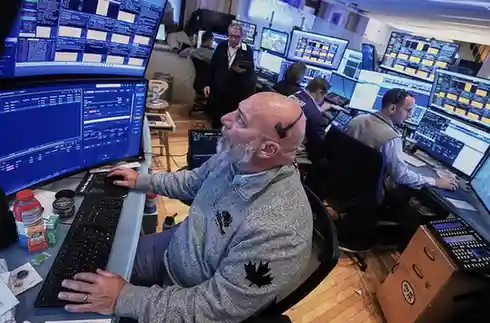
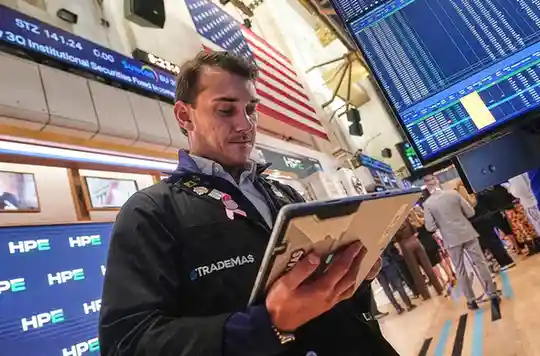
U.S. stocks fell on Thursday, hurt by drops for midsized banks as worries flare about the loans they’ve made. The S&P 500 slid 0.6% in its latest up-and-down day after erasing a morning gain, while the Dow Jones Industrial Average dropped 301 points, or 0.7%, and the Nasdaq composite lost 0.5%. Zions Bancorp. tumbled 13.1% after saying its third-quarter profit will take a hit because of a $50 million charge-off related to loans made to a pair of borrowers, citing “apparent misrepresentations and contractual defaults” along with “other irregularities.” Western Alliance Bancorp dropped 10.8% after saying it has sued a borrower for alleged fraud and is sticking by its 2025 financial forecasts. Scrutiny is rising on loan quality across lenders after last month’s Chapter 11 filing by First Brands Group, raising questions about whether these issues are isolated or signs of something larger.
Thursday’s sharp swings — the Dow flipped from a 169-point gain to a 472-point loss — continued a shaky trend since last week, when President Donald Trump rattled a previously calm market with threats of much higher tariffs on China. An early morning rally driven by optimism about the artificial-intelligence boom faded despite Taiwan Semiconductor Manufacturing Co. reporting stronger-than-expected profit and saying it expects “continued strong demand for our leading-edge process technologies,” an important signal for AI chipmakers like Nvidia, whose stocks have driven the market’s record run even as inflation stays high and the job market slows. Critics continue to warn that AI-linked stocks may be in a bubble reminiscent of the 2000 dot-com implosion. Companies are under pressure to prove profits after the S&P 500 surged 35% from its April low, with critics arguing prices have grown too expensive without matching earnings. Travelers fell 2.9% despite beating profit expectations because its revenue missed forecasts, while Hewlett Packard Enterprise slid 10.1% after long-term financial targets disappointed analysts.
These declines overshadowed a 4% gain for Salesforce, which unveiled a plan for more than 10% compounded annual revenue growth, and a massive 22.1% jump for J.B. Hunt after it smashed Wall Street’s profit estimates. The S&P 500 fell 41.99 points to 6,629.07, the Dow dropped 301.07 to 45,952.24, and the Nasdaq sank 107.54 to 22,562.54. In oil markets, crude prices reversed lower after Trump agreed to meet Russia’s Vladimir Putin in Hungary to discuss the war in Ukraine, which has driven U.S. efforts to block Russian oil purchases; U.S. crude fell 1.4% to $57.46 and Brent crude dropped 1.4% to $61.06.
Overseas, indexes climbed across much of Asia and Europe, with South Korea’s Kospi up 2.5% on hopes of a trade deal with Washington, boosting Samsung Electronics, Hyundai Motor, and Kia Corp. Treasury yields fell as investors sought safer assets, sending the 10-year yield down to 3.97% from 4.05%, while gold rose 2.5% to $4,304.60 per ounce, extending its stunning year-to-date gain to roughly 63%. A report showed manufacturing activity in the mid-Atlantic unexpectedly shrinking, one of the few economic data points still reaching the Federal Reserve as it weighs inflation risks against a weakening job market. The U.S. government shutdown continues to delay key economic updates, including the weekly unemployment claims report and an important inflation report that was held up a day earlier..

More News To Explore
Rallies for Nvidia and Big Tech help Wall Street nearly erase last week’s loss