FINANCE
Wall Street recovered from a significant morning loss as swings in Nvidia and Bitcoin influenced trading. Market volatility continues to challenge investors.

Wall Street scrambles back from a big morning loss as Nvidia and bitcoin swing
An early swoon shook the U.S. stock market on Friday, as Nvidia, bitcoin, gold and other high flyers swung on an increasingly antsy Wall Street, but it quickly calmed. After starting the day with a sharp drop of 1.3%, the S&P 500 erased all of it and then meandered up and down before finishing with a slight dip of 0.1%, while the Nasdaq composite flipped to a gain of 0.1% and the Dow Jones Industrial Average trimmed its loss to 309 points, or 0.7%, after earlier being down nearly 600. AI stocks were again at the center of the action, a day after dragging Wall Street to one of its worst drops since its springtime sell-off. Nvidia, the poster child of the artificial-intelligence frenzy, began the day down 3.4% before storming back to a 1.8% rise that pulled the market along.
Critics have been warning that the market could be primed for a drop because prices have shot so high since April, especially among AI-driven stocks, with Nvidia having more than doubled in four of the last five years and still up more than 40% this year. Even with recent sharp swings, the S&P 500 remains within 2.3% of its late-November record. Outside tech, Walmart edged down 0.1% after announcing that CEO Doug McMillon will retire in January, having been down as much as 3.6% earlier; McMillon helped the retailer embrace technology. All told, the S&P 500 fell 3.38 points to 6,734.11, the Dow dropped 309.74 to 47,147.48, and the Nasdaq rose 30.23 to 22,900.59. Companies can ease criticism of high stock prices by delivering solid profit growth, raising the stakes for Nvidia’s upcoming Wednesday report; falling short could drag the market lower, given Nvidia’s massive weight in major indexes.
Another path toward making stock prices look less expensive is falling interest rates, because lower-yielding bonds make stocks more attractive. Treasury yields had been falling most of the year on expectations of multiple Fed rate cuts, and the Fed has cut twice to support the slowing job market, but doubts are growing about a third cut in December as inflation remains above the 2% target. Fed officials have cited the government shutdown, which delayed key economic data, as a reason to potentially wait. The 10-year Treasury yield rose to 4.14% from 4.11%. Bitcoin, which can benefit from lower rates, fell below $95,000, back to May levels after trading near $125,000 in October.
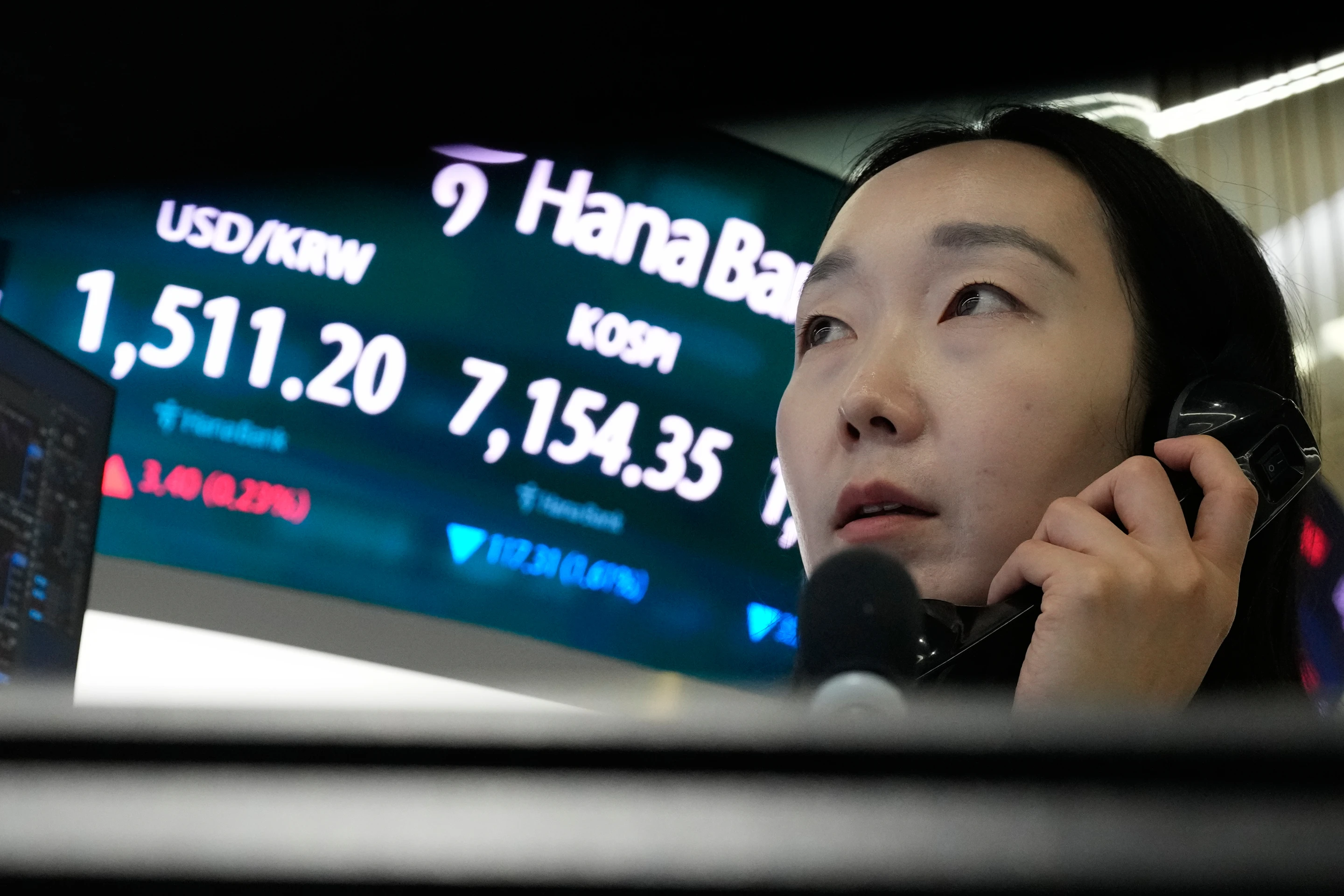
Gold sank 2.4% after hitting records throughout the year as investors sought protection from inflation and rising global debt, but higher rates hurt gold because it pays no interest. Overseas, stock indexes fell across Europe and Asia, with South Korea’s Kospi down 3.8% for one of the world’s steepest losses, while London’s FTSE 100 sank 1.1% amid speculation that the U.K. government may scrap plans to raise income taxes aimed at reducing national debt..

More News To Explore
Asian Shares and Oil Prices Mixed After US Launches Strikes in Southern Iran