POLITICS
Rep. Elise Stefanik ended her campaign for New York governor and announced she will not seek reelection to the U.S. House, reshaping the state’s Republican political landscape.
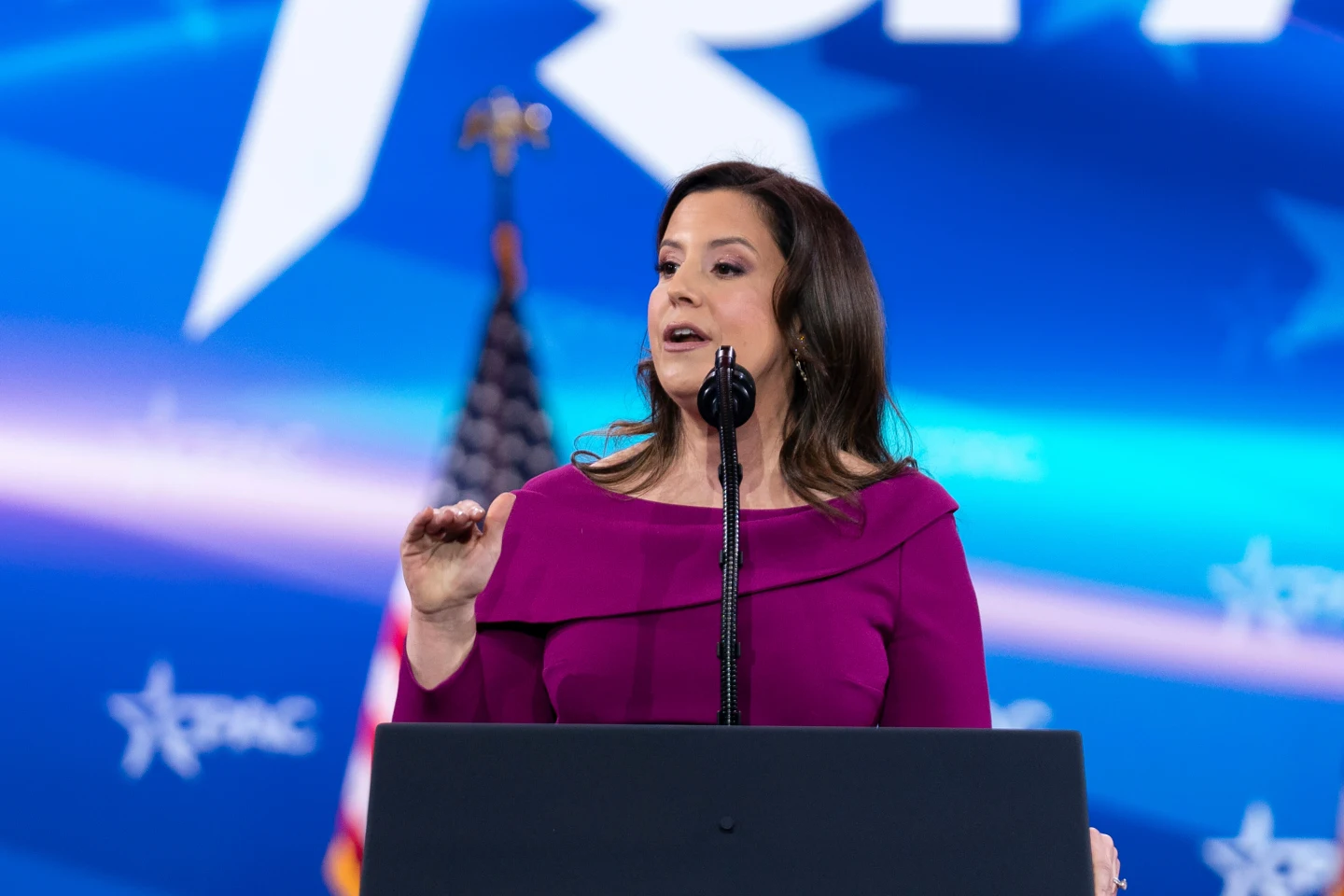
Rep. Elise Stefanik ends her campaign for New York governor and won’t seek reelection to House
Rep.
Elise Stefanik has ended her campaign for New York governor and announced that she will not seek reelection to the U.S.
House, a dual decision that marks a significant turning point in her political career and sends ripples through both state and national Republican circles; the announcement closes the door on what had been expected to be a high-profile gubernatorial bid and simultaneously creates an open House seat in one of the party’s most reliably Republican districts, forcing party leaders to recalibrate strategy on multiple fronts; Stefanik’s decision follows months of speculation about her political future, during which she weighed the challenges of mounting a statewide campaign in a heavily Democratic state against her influence and seniority in Washington; by stepping away from both races, she signals a clean break rather than a partial retreat, underscoring the depth of the shift in her plans and opening space for a new generation of Republican candidates to emerge; the move reshapes the Republican field for governor almost instantly, clearing the way for other contenders to seek national backing, donor support, and grassroots momentum without competing against one of the party’s most prominent figures; at the same time, her departure from the House creates a rare vacancy in a district that has been a cornerstone of Republican representation, setting up what is expected to be a competitive primary where ideology, loyalty, and local credentials will all be tested; Stefanik’s rise in national politics was marked by rapid ascension into leadership and high visibility within the party, making her exit from elected office particularly notable at a moment when Republicans are navigating internal debates about direction, messaging, and coalition-building; allies point to the demands of national politics, shifting priorities, and the toll of constant campaigning as factors that can influence such decisions, while critics view the move as an acknowledgment of the steep challenges facing Republicans in statewide races in New York; regardless of interpretation, the announcement forces party organizations to pivot quickly, as they must now recruit and support candidates for both a statewide contest and a congressional seat without the benefit of Stefanik’s established fundraising network and name recognition; Democrats, meanwhile, are likely to see opportunity in the uncertainty, particularly in using the open House seat to energize their base, even if the district’s partisan lean remains daunting; Stefanik’s decision also reflects broader patterns of political volatility, as lawmakers increasingly reassess long-term careers amid polarization, shifting voter expectations, and the demands of constant media scrutiny; for voters in her district, the news introduces a period of transition, prompting questions about who will best represent local interests and carry forward priorities related to the economy, national security, and constituent services; the timing of the announcement allows potential successors time to organize, but it also compresses decision-making for party leaders who must balance unity with competition during the nomination process; at the state level, the absence of Stefanik from the gubernatorial race may alter calculations about resource allocation, messaging, and turnout strategies, particularly as Republicans seek to broaden appeal in suburban and upstate regions; the decision not to seek reelection suggests Stefanik is closing one chapter without immediately opening another publicly defined path, leaving room for speculation about future roles outside of elected office, whether in policy, advocacy, or private endeavors; as the political landscape adjusts, her exit underscores how individual choices can reshape entire electoral maps, affecting candidate recruitment, fundraising flows, and strategic priorities; the coming months will reveal how effectively Republicans adapt to this sudden opening and whether new figures can fill the vacuum left by one of the party’s most recognizable voices in New York; ultimately, Stefanik’s decision stands as a reminder of the fluid nature of political careers and the cascading effects that a single announcement can have across multiple levels of government, redefining contests that once seemed settled and injecting fresh uncertainty into an already complex electoral environment..

More News To Explore
Judge orders special elections for Mississippi Supreme Court after Voting Rights Act violation