POLITICS
A federal judge ordered special elections for Mississippi Supreme Court seats after finding the state’s judicial election system violated the Voting Rights Act.
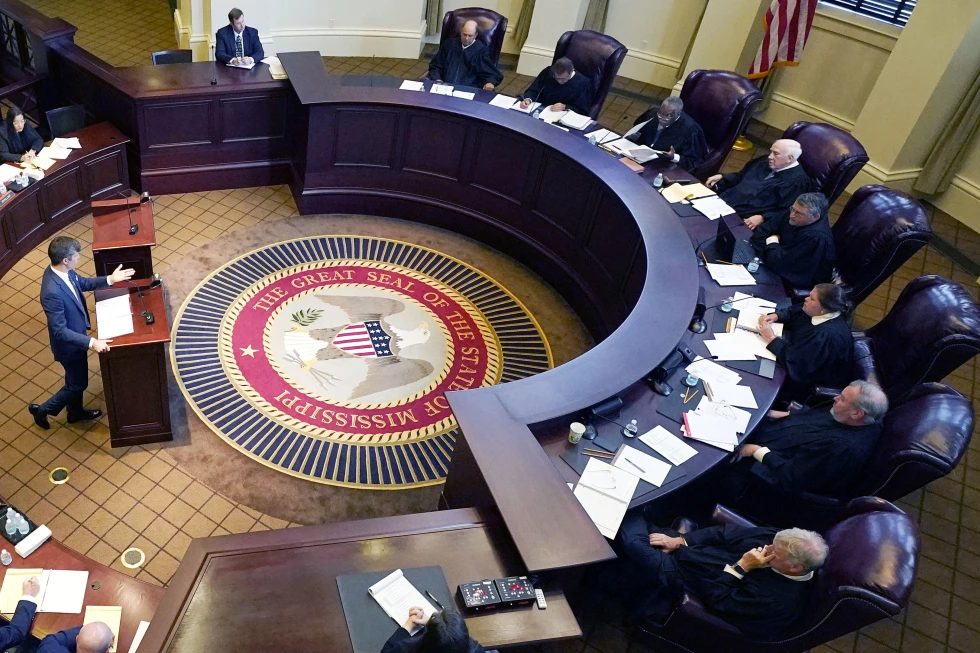
Judge orders special elections for Mississippi Supreme Court after Voting Rights Act violation
A federal judge has ordered Mississippi to hold special elections for seats on the state Supreme Court after determining that the existing judicial election structure violated the Voting Rights Act, a ruling that carries significant legal and political implications for how judges are selected in the state and how minority voting power is protected under federal law; the decision centers on findings that Mississippi’s method of electing Supreme Court justices diluted the voting strength of Black voters, denying them an equal opportunity to participate in the political process and to elect candidates of their choice, a core protection guaranteed by the landmark civil rights statute; the court’s order requires the state to move forward with special elections under a revised framework designed to comply with the Voting Rights Act, disrupting the status quo and forcing state officials to quickly adapt to new electoral requirements; the ruling follows years of legal challenges brought by plaintiffs who argued that the judicial districts and election mechanisms were drawn or structured in a way that marginalized minority voters, particularly in a state with a long and complex history of racial discrimination in voting; in its analysis, the court emphasized that judicial elections are not exempt from federal voting rights protections, rejecting arguments that the unique nature of courts should shield them from scrutiny under the Act; the order for special elections represents a rare and consequential remedy, underscoring the seriousness of the violation and signaling that incremental changes would not be sufficient to address the harm identified by the court; Mississippi officials now face the logistical and political challenge of implementing the ruling, including setting election timelines, determining district boundaries if required, and ensuring compliance with both state law and federal mandates; the decision has drawn sharp reactions across the political spectrum, with voting rights advocates hailing it as a critical step toward fair representation and accountability, while critics argue that it injects federal courts into state judicial systems and risks politicizing the bench; supporters of the ruling contend that ensuring equal access to the ballot and meaningful representation outweighs concerns about disruption, particularly when longstanding systems have been shown to disadvantage minority communities; the case also highlights broader national debates over the scope and enforcement of the Voting Rights Act in the years following Supreme Court decisions that weakened key provisions of the law, placing greater responsibility on lower courts to address discriminatory practices through case-by-case litigation; for Mississippi voters, the special elections could reshape the composition of the state’s highest court, influencing decisions on issues ranging from criminal justice to civil rights and economic regulation; the ruling may also prompt other states to reevaluate their own judicial election systems to avoid similar legal challenges, especially in jurisdictions with at-large or hybrid election models that have been criticized for diluting minority voting strength; legal experts note that while remedies involving judicial offices are relatively uncommon, the principles applied in this case could have ripple effects beyond Mississippi, reinforcing the idea that all elected positions must comply with federal voting standards; the timeline for the special elections and the specific structure under which they will be conducted remain subject to further court oversight and coordination with state authorities, adding an element of uncertainty to the process; as Mississippi moves forward, the case stands as a reminder that voting rights enforcement continues to evolve through the courts and that election systems, even those long in place, remain subject to challenge when they fail to provide equal access and representation; the outcome of the special elections will be closely watched not only for its immediate impact on the state Supreme Court but also for what it signals about the future of Voting Rights Act litigation and the balance between state autonomy and federal oversight in safeguarding democratic participation..

More News To Explore
US senator from Wyoming won’t seek reelection in 2026 in Republican stronghold