US
Nine people remain missing after a catastrophic tank rupture at a Washington paper mill, with officials saying rescue efforts have shifted toward recovery as hopes of finding survivors fade.
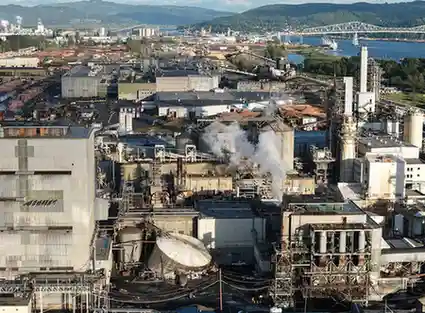
9 Missing After Washington Paper Mill Tank Rupture as Officials Say There’s No Hope of Survivors
A devastating industrial accident at a paper mill in Washington state has left nine people missing after a massive tank rupture triggered a deadly collapse and emergency response operation that officials now say offers little hope of survivors. The incident occurred at a large paper manufacturing facility where workers were reportedly conducting operations near a storage tank when the structure suddenly failed, unleashing a catastrophic wave of debris, chemicals, steam, and industrial material across parts of the site. Emergency responders, firefighters, hazardous materials teams, and rescue crews rushed to the scene following reports of explosions, structural collapse, and workers trapped inside heavily damaged sections of the facility. Authorities said the scale of destruction and dangerous conditions severely complicated rescue operations from the beginning, with unstable structures, toxic exposure risks, and ongoing fire hazards limiting access to critical areas where workers were believed to be located. Initial reports indicated that several employees managed to escape with injuries, while others remained unaccounted for in the immediate aftermath of the rupture. As search operations continued through the night and into subsequent days, officials gradually acknowledged the grim reality facing rescue crews, stating publicly that there was no realistic hope of finding survivors among the missing individuals. The emotional announcement devastated families gathered near the scene awaiting updates on loved ones who had been working during the incident. Witnesses described hearing an enormous blast-like sound followed by violent shaking, collapsing metal structures, and clouds of steam or dust spreading across the mill complex. Some workers reportedly ran for safety as alarms sounded and emergency evacuation procedures began unfolding amid confusion and panic. Industrial accidents involving large pressurized tanks or chemical storage systems can produce catastrophic force when structural failures occur, especially in facilities involving high temperatures, combustible materials, or heavy industrial machinery. Investigators from federal and state agencies quickly launched a major inquiry into what caused the rupture, focusing on maintenance records, operational safety procedures, inspection compliance, and possible mechanical or structural failures. Occupational safety experts noted that paper mills operate with complex industrial systems involving chemicals, heat, pressure, and heavy equipment, creating significant risks if safety protocols fail or equipment deteriorates.
Authorities emphasized that determining the precise cause of the accident would likely take weeks or months because of the extensive damage and hazardous conditions inside the site. Rescue teams used specialized equipment, drones, thermal imaging technology, and structural assessment units to search through wreckage while carefully monitoring risks of secondary collapses. Hazardous material concerns also complicated the operation because paper manufacturing facilities often store industrial chemicals used in pulping, bleaching, and processing operations. Officials worked to ensure that surrounding communities were protected from possible environmental contamination, air quality hazards, or water pollution resulting from the rupture. Local residents reported seeing smoke, steam, and emergency vehicles flooding the area shortly after the accident, while nearby roads were closed to allow emergency access and maintain public safety. Hospitals in the region prepared for possible mass casualties as injured workers received treatment for burns, trauma injuries, smoke inhalation, and exposure-related conditions. Community members organized vigils, support efforts, and donation campaigns for affected families as the tragedy drew national attention. Labor advocates and workplace safety organizations highlighted the dangers faced by industrial workers, arguing that fatal workplace incidents often expose deeper systemic issues involving aging infrastructure, insufficient oversight, production pressure, or inadequate maintenance practices. The paper manufacturing industry has historically faced safety challenges due to the use of heavy machinery, combustible dust, chemical processing systems, and high-pressure equipment. Experts said tank ruptures can occur because of corrosion, over-pressurization, design flaws, improper maintenance, welding failures, or operational errors, though investigators cautioned against speculation before official findings are completed. Federal workplace safety agencies are expected to examine whether the facility complied with regulations governing inspections, hazard communication, emergency response planning, and equipment integrity management. Corporate representatives expressed condolences to the families of the missing workers and pledged full cooperation with investigators while suspending affected operations at the mill.
Company officials stated that employee safety remains their top priority and promised support for families impacted by the disaster. However, industrial accidents of this scale often generate scrutiny regarding corporate safety culture, staffing practices, inspection frequency, and investment in infrastructure modernization. Unions representing industrial workers frequently argue that cost-cutting measures and production demands can contribute to dangerous working conditions if maintenance or safety systems are neglected. Families of the missing workers described agonizing uncertainty as rescue operations transitioned into recovery efforts. Many gathered near emergency coordination centers hoping for information while grief counselors, clergy members, and support teams assisted relatives struggling to process the tragedy. Local officials praised first responders for operating under extremely dangerous conditions despite little chance of successful rescues, emphasizing that crews continued working carefully to recover victims and provide answers to families. Industrial disasters often leave long-lasting emotional and economic impacts on surrounding communities, especially in towns where major manufacturing facilities serve as significant employers. Workers at paper mills frequently develop close relationships after years of working together in demanding environments, making such tragedies deeply personal for entire communities. Environmental monitoring teams continued testing air and water quality around the facility to assess any contamination risks associated with the rupture. Authorities stated that there was no immediate large-scale danger to the general public, though certain areas near the site remained restricted due to debris and hazardous conditions. Engineers and safety experts conducted structural evaluations to determine whether additional parts of the facility remained at risk of collapse. Investigators are also expected to review whether warning signs or previous safety concerns existed before the incident occurred.
Large industrial tanks are subject to strict inspection requirements because failures can release enormous force capable of causing catastrophic destruction within seconds. Workplace safety advocates say industrial disasters often reveal a combination of factors rather than a single isolated mistake, including maintenance gaps, operational pressure, communication failures, or aging infrastructure. The tragedy renewed broader national discussions about workplace safety standards, industrial oversight, and the human cost of dangerous labor environments that support critical manufacturing industries. Politicians and public officials offered condolences while calling for thorough investigations to ensure accountability and prevent similar disasters in the future. Experts noted that paper mills remain essential parts of manufacturing supply chains, producing materials used in packaging, printing, hygiene products, and industrial applications, yet many facilities operate with aging systems that require significant investment to maintain modern safety standards. As investigators continue examining the Washington paper mill disaster, families of the missing workers face the painful reality that hopes for survival have faded. The incident stands as one of the most serious industrial accidents in the region in recent years, drawing attention to the risks industrial workers face daily while performing jobs essential to manufacturing and economic activity. Recovery operations are expected to continue for days as crews work carefully through unstable wreckage searching for victims and evidence that may explain how such a catastrophic failure occurred. For the affected families and community, the tragedy represents not only a devastating personal loss but also a stark reminder of the fragile line between routine industrial work and disaster when critical systems fail under dangerous conditions..

More News To Explore
Democrats Back Independent Candidates in New Red State Election Strategy Ahead of 2026 Races