WORLD
Israeli forces and Hezbollah militants engaged in intense clashes near a strategic river in southern Lebanon following overnight airstrikes, escalating fears of a broader regional conflict along the Israel-Lebanon border.
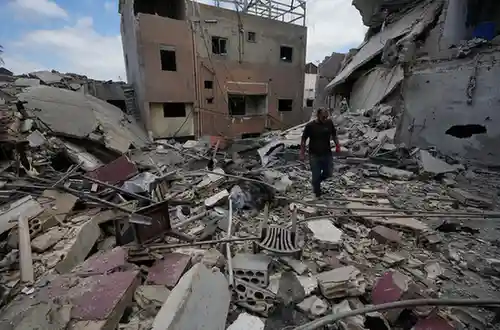
Israel and Hezbollah Exchange Heavy Fire Near Strategic Lebanese River After Overnight Strikes
Israeli forces and Hezbollah militants exchanged intense artillery fire, drone attacks, and cross-border strikes near a strategically important river in southern Lebanon following a night of escalating military operations that heightened fears of a wider regional conflict and further destabilized the already tense Israel-Lebanon border region. According to military officials and regional sources, the overnight confrontation began after Israeli aircraft launched multiple airstrikes targeting what officials described as Hezbollah military infrastructure, weapons storage facilities, command centers, and suspected rocket launch positions located near villages surrounding the Litani River, a strategically significant waterway that has long played a central role in military calculations involving southern Lebanon. Hezbollah responded with a series of rocket barrages, anti-tank missile launches, and armed drone operations directed toward Israeli military positions and border communities, triggering air raid sirens across northern Israel and prompting emergency responses in several towns close to the frontier. The clashes represent one of the most serious escalations in recent months and have renewed concerns among international observers that the conflict between Israel and Hezbollah could evolve into a larger regional war involving Iran-backed armed groups, Israeli ground operations, and potential international diplomatic intervention. Residents on both sides of the border reported hearing continuous explosions throughout the night as artillery fire illuminated the sky over southern Lebanon and northern Israel. Lebanese security officials stated that several areas near the Litani River experienced heavy bombardment, forcing families to flee nearby villages amid fears of continued attacks. Israeli authorities confirmed that military aircraft targeted multiple Hezbollah-linked positions and claimed the strikes were conducted in response to intelligence indicating preparations for planned attacks against Israeli territory. The Israeli military said its operations focused on degrading Hezbollah’s military capabilities, including rocket launch infrastructure and weapons depots allegedly used to coordinate attacks against Israeli forces stationed near the border. Hezbollah, meanwhile, described its operations as retaliatory measures against Israeli aggression and claimed its fighters successfully targeted Israeli military installations using precision-guided missiles and drones. The group’s media channels released statements asserting that several Israeli positions were directly hit during the exchanges, although independent verification of battlefield claims remained difficult due to ongoing hostilities and restricted access to conflict zones. Analysts noted that the Litani River region holds major strategic significance because United Nations resolutions following the 2006 Lebanon war called for Hezbollah fighters to remain north of the river while Lebanese and UN peacekeeping forces maintained oversight of the border area.
However, over the years, Israel has repeatedly accused Hezbollah of expanding its military presence south of the river, constructing tunnels, storing advanced weapons, and establishing surveillance infrastructure close to Israeli territory. Israeli officials argue that Hezbollah’s growing arsenal, which reportedly includes tens of thousands of rockets and precision-guided missiles supplied or supported by Iran, poses one of the most serious national security threats facing Israel today. The latest violence unfolded amid already elevated tensions across the Middle East following ongoing regional conflicts involving Gaza, Syria, Iraq, and Iran-linked armed groups operating across multiple fronts. Diplomatic officials from the United States, France, and the United Nations urged both sides to exercise restraint and avoid actions that could trigger a broader war. UN peacekeeping forces operating in southern Lebanon under the United Nations Interim Force in Lebanon mission reported increased military activity near the Blue Line, the UN-demarcated boundary separating Israel and Lebanon, and warned that continued escalation risked catastrophic humanitarian consequences for civilians living in the border region. International humanitarian organizations expressed alarm over reports of civilian displacement, infrastructure damage, and interruptions to medical services caused by the fighting. Several villages in southern Lebanon reportedly suffered power outages and communication disruptions after overnight strikes damaged utility infrastructure, while schools and public institutions in northern Israeli communities were temporarily closed due to security concerns and ongoing rocket threats. Israeli Prime Minister Benjamin Netanyahu stated that Israel would continue taking all necessary measures to defend its territory and citizens against Hezbollah attacks, emphasizing that the military remained prepared for both defensive and offensive operations if the situation intensified further. Hezbollah leaders, meanwhile, vowed continued resistance and warned that any large-scale Israeli ground operation inside Lebanon would face a strong and coordinated response from the group’s fighters. Regional analysts warned that continued clashes near the Litani River could draw additional Iran-backed armed factions into the conflict, including militias operating in Syria and Iraq that have previously launched attacks against Israeli or American targets. Iran officially denied direct involvement in the latest violence but reiterated support for what it described as resistance movements confronting Israeli military actions in the region.
The conflict also raised concerns over the possibility of disruptions to international trade routes, energy markets, and regional diplomatic initiatives that have sought to reduce tensions between Israel and Arab states in recent years. Military experts observed that the use of drones, guided missiles, and precision artillery during the overnight exchanges demonstrated the increasingly sophisticated capabilities deployed by both sides since the 2006 war. Israel has significantly upgraded its missile defense systems, intelligence networks, and aerial surveillance capabilities over the past decade, while Hezbollah has expanded its stockpile of rockets, drones, and advanced weaponry with assistance from Iran and allied groups. Security officials fear that even a limited escalation could quickly spiral into a prolonged conflict involving large-scale air campaigns, missile attacks on major cities, cyber operations, and potential disruptions to regional infrastructure. Financial markets reacted cautiously to reports of the violence, with oil prices showing volatility amid fears that broader instability in the Middle East could threaten energy production and transportation routes. The United States reportedly intensified diplomatic communication with Israeli and Lebanese officials in an effort to prevent further escalation and preserve existing ceasefire understandings along the border. French diplomats, who have historically played a major role in Lebanese affairs, also called for immediate de-escalation and renewed support for diplomatic negotiations aimed at stabilizing southern Lebanon. Political divisions inside Lebanon complicated efforts to formulate a unified national response, as Hezbollah’s military activities remain deeply controversial among Lebanese political factions already struggling with economic collapse, institutional instability, and public dissatisfaction over governance failures. Critics within Lebanon accused Hezbollah of risking another devastating war that the country can ill afford, while supporters argued that resistance against Israeli military operations remains necessary for national defense. In Israel, opposition leaders and security analysts debated whether the government’s military strategy could successfully deter Hezbollah without triggering a broader regional confrontation that would place civilian populations at increased risk. Human rights organizations warned that prolonged hostilities could worsen the humanitarian situation for civilians living near the border, many of whom have already experienced repeated displacement, economic hardship, and psychological trauma from years of intermittent violence.
Hospitals and emergency responders in both Lebanon and Israel remained on high alert as authorities prepared for the possibility of additional strikes and retaliatory attacks. Reports from local residents described widespread fear and uncertainty as families monitored news updates and sought shelter during periods of heavy bombardment. International observers noted that despite repeated diplomatic efforts over the years, the underlying political and military tensions between Israel and Hezbollah remain unresolved, leaving the border vulnerable to sudden escalations triggered by isolated incidents, targeted killings, or broader regional developments. Analysts also emphasized that the current confrontation reflects the increasingly interconnected nature of Middle Eastern conflicts, where events in Gaza, Syria, Iraq, and Iran can rapidly influence military dynamics along the Israel-Lebanon frontier. The strategic importance of the Litani River region further amplifies concerns because control over territory near the river affects military positioning, surveillance capabilities, and access routes used by armed groups operating in southern Lebanon. Israeli defense officials indicated that military operations would continue as long as Hezbollah activities posed a threat to Israeli security, while Hezbollah leaders insisted that their forces remain prepared for sustained confrontation if Israeli strikes persist. Diplomatic negotiations aimed at reducing tensions continued behind the scenes, though officials acknowledged that achieving a durable ceasefire would require addressing deeper disputes involving border security arrangements, Hezbollah’s military presence, Iranian influence in the region, and the broader geopolitical rivalry shaping Middle Eastern politics. As the situation remained highly volatile, civilians on both sides of the border faced growing uncertainty over whether the overnight violence represented a temporary escalation or the beginning of a more dangerous and prolonged conflict that could reshape regional security dynamics for months or even years to come..

More News To Explore
Trump Says Pilots Safe After U.S. Apache Helicopter Crashes Near Strait of Hormuz