FINANCE
Asian markets traded mixed as investors reacted to a sharp sell-off in major technology stocks on Wall Street, while concerns over interest rates, economic growth, and corporate earnings continued to influence sentiment across the region.
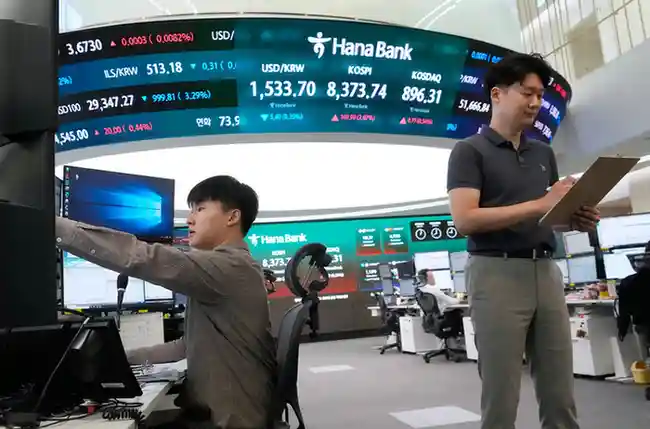
Asian Stocks Mixed After Sharp Tech Sell-Off Weighs on Global Markets
Asian stock markets delivered a mixed performance on Wednesday as investors assessed the impact of a significant sell-off in major U.S. technology companies that rattled Wall Street and raised fresh concerns about the sustainability of the recent rally in global equities. While some regional indexes managed to recover early losses and finish higher, others remained under pressure as traders weighed the implications of declining technology valuations, ongoing interest rate uncertainty, and mixed economic signals from the world's largest economies. The cautious trading session reflected growing investor concern that the remarkable gains recorded by technology stocks over the past year may be facing a period of consolidation as valuations remain elevated and market participants increasingly scrutinize future earnings growth. The weakness originated in the United States, where several of the market's largest technology companies experienced substantial declines, dragging major indexes lower and reducing risk appetite across global markets. The sell-off came amid renewed debate about artificial intelligence spending, corporate profitability, and the long-term outlook for technology giants that have been at the center of the global stock market rally. Investors have increasingly questioned whether current valuations accurately reflect future growth prospects, especially as borrowing costs remain relatively high and economic growth shows signs of moderation in several regions. In Japan, the benchmark Nikkei 225 index fluctuated throughout the session as investors balanced concerns over global technology stocks with optimism surrounding domestic corporate earnings and continued support from the country's economic recovery. Technology-related shares faced pressure due to their exposure to global semiconductor demand, while exporters benefited from currency movements that improved earnings expectations. Analysts noted that Japanese investors remained relatively confident in the country's long-term economic outlook, but many preferred to reduce exposure to higher-risk technology stocks until greater clarity emerges regarding global demand trends. South Korea's stock market experienced similar volatility as major semiconductor manufacturers and technology exporters reacted to developments in the U.S. market. The country's economy remains heavily dependent on the technology sector, making Korean equities particularly sensitive to shifts in investor sentiment toward semiconductor and artificial intelligence-related companies. Despite the challenges, some investors viewed the decline as a buying opportunity, citing strong long-term demand for advanced chips, data centers, and AI infrastructure. In Hong Kong, equities struggled to find direction as investors monitored developments in both U.S. and Chinese markets.
Technology stocks listed in the city faced renewed selling pressure, reflecting broader concerns about global growth and the pace of recovery in China's economy. Market participants remained focused on government efforts to support economic activity through policy measures designed to stimulate consumption, investment, and business confidence. While recent data suggested some improvement in economic conditions, investors continued to seek stronger evidence that growth momentum is becoming sustainable. Mainland Chinese markets showed relative resilience despite the weakness in global technology shares. Investors welcomed signs of policy support and ongoing measures aimed at strengthening economic activity. However, gains remained limited as concerns persisted about the property sector, consumer spending patterns, and international trade dynamics. Analysts noted that Chinese authorities are likely to continue implementing targeted stimulus measures to support growth, particularly as external demand faces uncertainty amid slower economic expansion in several major economies. Elsewhere in Asia, Australian equities traded in mixed fashion as mining companies and financial institutions helped offset weakness in technology-related shares. Commodity prices remained an important factor for market performance, with investors closely monitoring developments in global energy and metals markets. Australia's resource sector continued to benefit from expectations of stable demand for raw materials, although concerns about China's economic outlook limited enthusiasm among some investors. Singapore, Taiwan, and several Southeast Asian markets also recorded varied performances as traders responded to both local economic developments and broader global trends. The mixed regional picture highlighted the complex environment facing investors, who must navigate competing forces including technological innovation, geopolitical tensions, inflation concerns, and shifting monetary policy expectations. Market participants increasingly believe that future gains may depend more heavily on company-specific fundamentals rather than broad-based enthusiasm for growth sectors. The technology sell-off that influenced Asian trading was driven by several factors, including profit-taking after an extended rally, concerns about future earnings growth, and uncertainty surrounding interest rate policy. Technology companies have enjoyed exceptional investor interest due to their involvement in artificial intelligence, cloud computing, semiconductor manufacturing, and digital infrastructure. However, elevated valuations have prompted some analysts to warn that even minor disappointments in earnings or guidance could trigger significant market reactions.
Investors are therefore paying close attention to upcoming corporate results and management forecasts for indications of future growth potential. Interest rates remain another major factor influencing market sentiment. Although inflation has moderated in several economies, central banks continue to emphasize the importance of maintaining price stability. Investors are closely monitoring signals from monetary policymakers regarding the timing and pace of potential rate adjustments. Higher borrowing costs can affect technology companies disproportionately because many growth-oriented businesses rely on future earnings expectations that become less attractive when interest rates remain elevated. This dynamic has contributed to periodic volatility across technology-focused sectors throughout the year. Economic data released in recent weeks has provided a mixed picture of global growth conditions. While labor markets in many countries remain relatively strong, manufacturing activity has shown signs of slowing in certain regions. Consumer spending has also become more uneven as households adjust to higher financing costs and ongoing inflationary pressures. These factors have led investors to adopt a more selective approach, favoring companies with strong balance sheets, reliable cash flows, and proven profitability. Artificial intelligence continues to be one of the most influential themes in financial markets, and developments within the sector remain closely watched by investors worldwide. Technology companies have committed billions of dollars to AI-related investments, including advanced semiconductor production, cloud infrastructure expansion, and software development. While many analysts remain optimistic about the transformative potential of these technologies, questions persist regarding the timeline for generating meaningful returns on such investments. As a result, market participants have become increasingly sensitive to any signs that spending levels may exceed near-term revenue opportunities. Currency markets also played a role in shaping investor sentiment across Asia. Fluctuations in exchange rates can significantly affect export-oriented economies and multinational corporations.
A stronger U.S. dollar has the potential to influence capital flows, commodity prices, and corporate earnings expectations, creating additional complexity for investors attempting to assess market direction. Central bank actions and economic data releases are expected to remain key drivers of currency movements in the months ahead. Looking ahead, investors will focus on several important catalysts that could determine the next phase of market performance. Corporate earnings reports, economic growth data, inflation indicators, and central bank communications are all expected to influence trading activity. Market participants are also closely monitoring geopolitical developments, trade relations, and policy decisions that could affect business confidence and investment activity. While short-term volatility may persist, many analysts believe that long-term investment opportunities remain available for companies capable of delivering consistent earnings growth and adapting to changing economic conditions. The mixed performance of Asian stocks following the technology-driven decline on Wall Street underscores the interconnected nature of modern financial markets. Developments in one region can quickly influence investor behavior elsewhere, particularly when they involve globally significant sectors such as technology and artificial intelligence. Although recent market weakness has raised concerns about valuation levels and future growth prospects, many investors continue to view technological innovation as a powerful long-term driver of economic expansion. As a result, the current period of volatility may ultimately be seen as a healthy adjustment rather than a fundamental shift in market direction. For now, traders and investors remain focused on balancing optimism about future technological advances with caution regarding valuations, interest rates, and economic growth. The coming weeks are likely to provide greater clarity on whether the recent sell-off represents a temporary pause in the market rally or the beginning of a broader period of consolidation. Until then, Asian markets are expected to remain sensitive to developments in global technology stocks, central bank policy decisions, and economic data releases that shape expectations for growth and corporate profitability around the world..

More News To Explore
Asian Shares Follow Wall Street Lower as Bond Markets Intensify Global Pressure