POLITICS
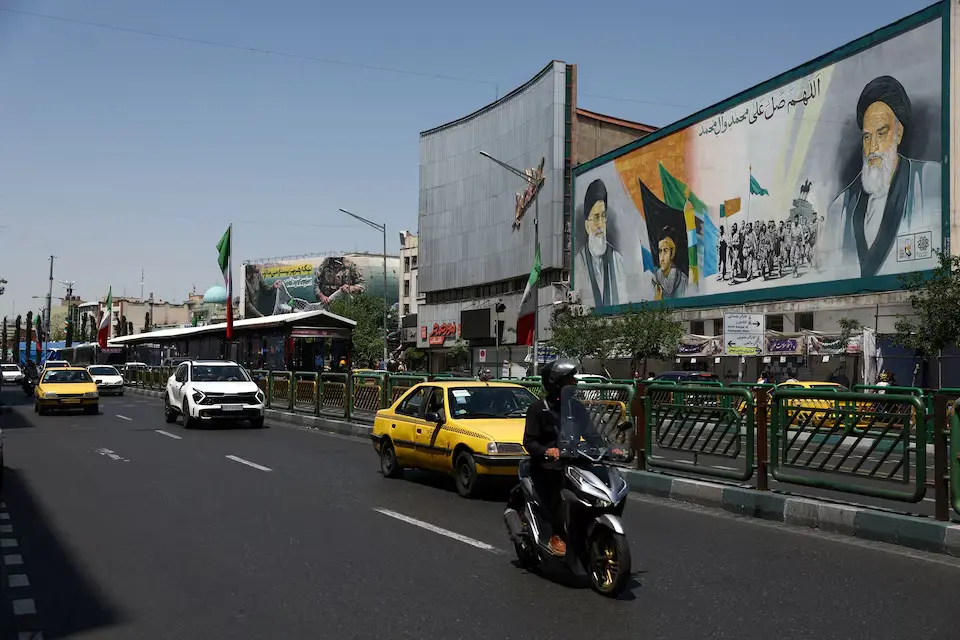
Donald Trump, Xi Jinping and Vladimir Putin are scheduled to meet on the sidelines of the APEC summit in Shenzhen, marking an unprecedented gathering of the leaders of the world's three major nuclear powers. Discussions are expected to focus on the Iran war and nuclear disarmament, although analysts question whether the meeting will produce meaningful agreements.
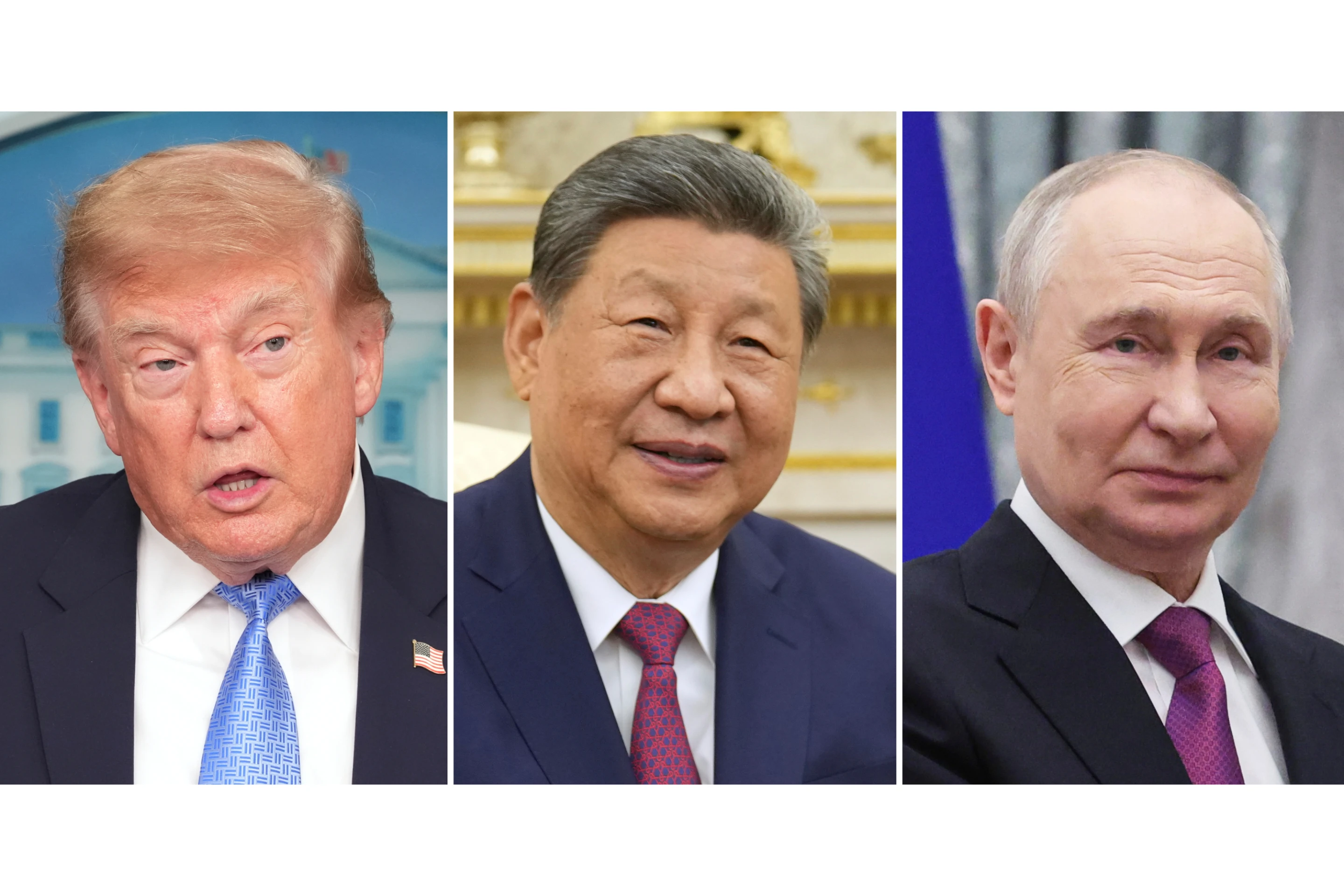
Trump, Xi and Putin to Hold Historic Three-Way Meeting at APEC Summit in China
The leaders of the United States, China and Russia are preparing for an unprecedented three-way meeting on the sidelines of next week's Asia-Pacific Economic Cooperation summit in Shenzhen, China. U.S. President Donald Trump, Chinese President Xi Jinping and Russian President Vladimir Putin are scheduled to meet Thursday in the Chinese technology and financial hub, bringing together the heads of the world's three most powerful nuclear-armed countries. The White House confirmed the planned gathering on Friday, describing a diplomatic development that comes at a particularly complicated moment in relations between Washington, Beijing and Moscow. Although the meeting represents a significant moment in international diplomacy, analysts have cautioned against expecting major breakthroughs. Many believe the gathering could carry greater symbolic importance than practical consequences, particularly given the substantial disagreements separating the three governments. Trump has maintained a relatively warm relationship with Xi following a temporary resolution of the trade dispute between Washington and Beijing last year. However, significant differences remain over the U.S. military campaign against Iran and other economic and geopolitical issues involving the world's two largest economies. Trump has also pursued closer diplomatic engagement with Putin despite Russia's continuing war against Ukraine, which is approaching its fifth year, and Moscow's increasingly close military, intelligence and diplomatic relationship with Tehran. The American president has indicated that the proposed meeting could provide an opportunity to discuss the U.S. war with Iran and explore a possible agreement involving the nuclear weapons stockpiles of all three countries. According to a senior U.S. official who briefed reporters anonymously, Trump intends to discuss Iran with Xi and Putin but does not plan to raise the war in Ukraine during the three-way meeting. Nuclear disarmament is expected to be one of the central issues. The last major nuclear arms control agreement between Washington and Moscow, known as New START, expired in February. Its expiration removed restrictions on the world's two largest nuclear arsenals for the first time in more than half a century. Before the treaty expired, Russia proposed extending the agreement for another year. Trump rejected that proposal, instead calling for a new and modernized nuclear arms agreement that would include China alongside the United States and Russia.
The upcoming meeting is intended to open discussions about the possibility of future nuclear disarmament negotiations. The senior U.S. official described the gathering as the beginning of what could become a productive conversation between the three governments but emphasized that no formal agreements or announcements were expected. China's participation presents a significant challenge for any potential nuclear arms control arrangement. Pentagon estimates place China's nuclear stockpile at more than 600 warheads, substantially below the arsenals maintained by the United States and Russia, which are each estimated to possess more than 5,000 warheads. Beijing has shown limited interest in joining a trilateral nuclear agreement, arguing in practice that its considerably smaller arsenal makes negotiations with the two much larger nuclear powers difficult to justify. Trump administration officials recognize that persuading China to participate in nuclear arms control discussions will be challenging. Nevertheless, the U.S. official argued that Beijing should take a more active role in addressing international security concerns, describing the meeting as an opportunity for China to take its place at the adult table on an issue of global importance. China's decision to host the gathering could also reflect Xi's broader ambitions to demonstrate Beijing's growing international influence and diplomatic standing. For Putin, participation offers an opportunity to reinforce Russia's position as a major global power capable of engaging directly with Washington and Beijing on questions affecting international security. Edgard Kagan, a former U.S. ambassador to Malaysia who is now associated with the Center for Strategic and International Studies, suggested that one of Putin's objectives was to signal that Russia could negotiate directly with the American and Chinese presidents on matters involving Ukraine. Such an arrangement could create diplomatic concerns for Kyiv and European governments, which have repeatedly insisted that Ukraine must be directly involved in decisions concerning its future. The proposed meeting could also overshadow the broader APEC summit, which will bring together representatives of 21 economies in Shenzhen. The gathering provides China with an opportunity to showcase one of its most remarkable economic transformations. Shenzhen developed from a relatively small fishing village into a major international technology and manufacturing center within several decades. Its modern infrastructure, technology companies and expanding financial sector have made it one of China's most prominent economic cities. However, the three-way meeting could complicate Beijing's efforts to promote its broader diplomatic message at the summit.
China has frequently criticized what it describes as a Cold War mentality among Western governments, arguing that such thinking contributed to tensions surrounding Russia's invasion of Ukraine. Beijing has also accused Washington of weakening international institutions and established agreements through its conduct of the war against Iran. Bringing together the leaders of three major powers for direct discussions could create tensions with China's stated support for multilateral diplomacy and international cooperation. Hoo Tiang Boon, a professor of Chinese foreign policy at Nanyang Technological University, said the gathering could work against Beijing's efforts to present itself as a defender of multilateralism and free trade. He suggested that concentrating diplomatic influence among three major powers could appear inconsistent with China's broader message about international cooperation. The planned meeting will bring together leaders who have already developed extensive bilateral relationships. Putin and Xi have maintained a particularly close political and personal relationship since Xi became China's president in 2013. The two leaders have met more than 40 times and have publicly referred to one another as dear friends. Trump and Putin have also met face-to-face on seven occasions, most recently during their meeting in Alaska in August 2025. Meanwhile, Xi and Trump have held direct discussions on eight occasions, including Xi's state visit to Washington in September. Economic relations between China and Russia have become increasingly important since Moscow launched its full-scale invasion of Ukraine in 2022. China is now Russia's largest trading partner, with commercial ties expanding as Western governments introduced sanctions and attempted to isolate the Russian economy. Beijing increased purchases of Russian energy resources and became a major supplier of technologies and industrial components used by Russian industries, including sectors connected to weapons manufacturing. China has continued these commercial relationships despite repeated Western demands that it reduce support for Moscow. Before the invasion of Ukraine, Xi and Putin declared that their countries shared a friendship without limits, emphasizing the depth of their strategic partnership. China has officially maintained that it is neutral in the conflict, although Beijing has repeatedly criticized Western support for Kyiv and argued that NATO's policies contributed to the circumstances surrounding Russia's military intervention. Moscow, in turn, has consistently expressed support for Beijing's position on Taiwan and its claims concerning the island's political status. Trump's own approach toward Russia has also attracted attention. The American president recently reached a diesel-related arrangement with Moscow, temporarily waiving sanctions to allow the sale of millions of tons of the fuel.
Trump has also attributed rising energy prices to Ukrainian attacks on Russian oil refineries. Analysts, however, have pointed primarily to the war involving Iran as a major factor behind the increase in global crude oil prices. The proposed Shenzhen meeting has generated particular concern in Kyiv. Ukrainian President Volodymyr Zelenskyy has expressed apprehension that the three leaders could discuss a potential settlement of the Ukraine war without meaningful Ukrainian participation. Such concerns reflect broader fears that major powers could attempt to determine the future of Ukraine through negotiations conducted outside the direct involvement of its government. Comparisons have also emerged between the planned gathering and the historic Yalta Conference of 1945. At that meeting, the leaders of the United States, Britain and the Soviet Union discussed the postwar international order, agreed on arrangements for dividing Germany and Berlin into four military occupation zones, and finalized important plans for the establishment of the United Nations. The comparison has raised questions about whether the three-way meeting could similarly influence major international decisions involving countries not represented at the negotiating table. Kremlin spokesperson Dmitry Peskov dismissed the comparisons, arguing that any potential understanding reached in Shenzhen could not simply be imposed on other countries. He acknowledged the significance of bringing together the leaders of Russia, China and the United States but emphasized that international relations should not be based on one country imposing its preferred global order on others. Peskov said that the international system should instead be guided by mutual benefit and mutual respect. Ultimately, the planned Trump-Xi-Putin meeting represents an unusual diplomatic opportunity involving three governments with considerable influence over global security, economic stability and international institutions. The discussions could open a channel for future nuclear arms control negotiations and provide an opportunity to exchange views on the war involving Iran. However, disagreements over Ukraine, strategic competition, nuclear capabilities and the role of international institutions remain substantial. With no immediate agreements expected, the significance of the Shenzhen gathering may depend less on concrete diplomatic outcomes and more on whether the three leaders can establish a foundation for continued communication. The meeting will also test China's ability to balance its strategic relationship with Russia, its economic engagement with the United States and its ambition to present itself as a leading advocate of a more cooperative international order..




More News To Explore
Where Trump Stands With Republicans Nationally, According to the Latest AP-NORC Poll