ENTERTAINMENT
Robert Pattinson has been announced as the next James Bond, bringing an unconventional acting career and a history of challenging traditional screen masculinity to the iconic spy franchise. With Denis Villeneuve directing, the new 007 film could introduce a different interpretation of the legendary British secret agent.
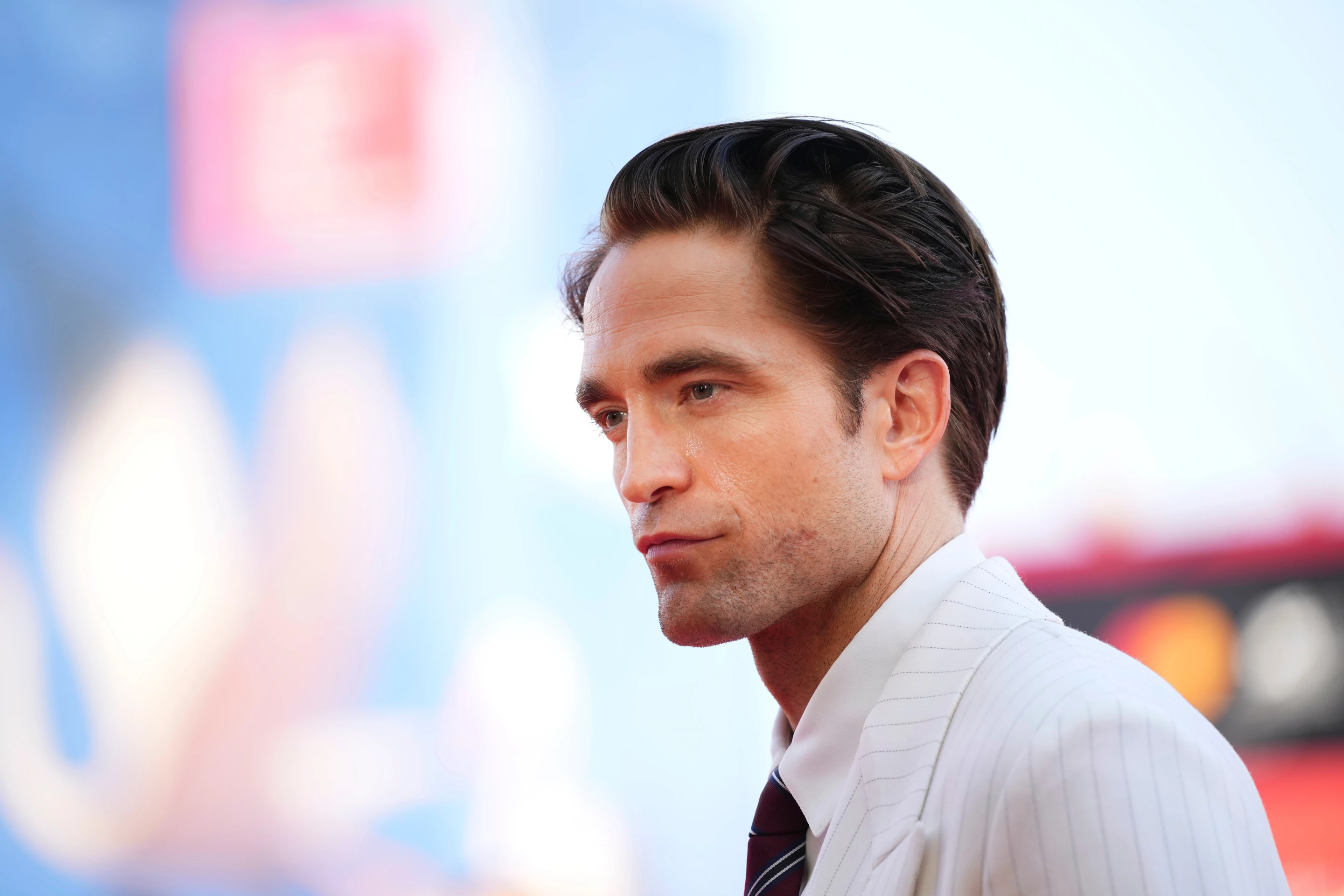
Robert Pattinson as James Bond: Why Hollywood's Unconventional Star Could Redefine 007
Robert Pattinson's selection as the next James Bond marks a significant new chapter for one of cinema's most recognizable franchises. Rather than choosing a relatively unknown performer to take over the iconic role, the producers have selected an actor whose career has unfolded in front of international audiences over nearly two decades. Although Pattinson possesses the traditional British appearance and refined screen presence associated with 007, his approach to acting has often challenged the conventions of the confident, charismatic and physically assured action hero. His appointment therefore represents an interesting combination of commercial star power and unconventional artistic sensibility. Pattinson first entered international prominence as a teenager when he was cast in Harry Potter and the Goblet of Fire at the age of 17. The film was released when he was 19, and his subsequent appearance in the Twilight franchise transformed him into a global celebrity. Released just three years after Harry Potter and the Goblet of Fire, Twilight was only his fourth film. His early career also included a small role in Mira Nair's Vanity Fair, although his scenes were ultimately removed from the final version. Despite his growing popularity, Pattinson initially struggled with the expectations surrounding his sudden fame. During an interview connected to the release of Cosmopolis, he was asked whether he felt confident that he was an actor. His immediate response was no. He explained that becoming associated with a particular public image could create a sense of professional baggage, making it difficult to convince audiences that he could become something different. Pattinson described the challenge of wanting people to see him in another way while simultaneously feeling uncertain about stepping into unfamiliar roles. That uncertainty became an important part of his artistic development. After the Twilight films concluded, Pattinson deliberately moved away from conventional Hollywood projects and began collaborating with filmmakers known for ambitious, unconventional storytelling. He worked with directors including Werner Herzog, David Cronenberg, James Gray and the Safdie brothers.
His later collaborations expanded to include Claire Denis, Robert Eggers, Bong Joon Ho and Lynne Ramsay. These projects allowed him to explore psychologically complicated characters and performances that frequently challenged traditional expectations of leading men. His casting as James Bond is therefore not simply the predictable progression of a conventional movie star. Although he was reportedly the biggest name among the five actors who screen-tested for the role, his career has largely been defined by experimentation, artistic exploration and a willingness to embrace unconventional characters. Pattinson has the angular features, British background and classic appearance that could make him convincing in a tailored Bond suit. However, his performances have generally leaned toward portraying troubled, unpredictable, mysterious and emotionally complicated young men rather than the effortlessly confident masculinity traditionally associated with the famous secret agent. This contrast could make his interpretation of 007 particularly interesting. The upcoming 26th James Bond film will be directed by Denis Villeneuve, with Steven Knight responsible for the screenplay. The creative team has the opportunity to introduce a new direction for the franchise while maintaining its established identity. Previous Bond actor Daniel Craig also challenged several traditional elements of the character during his tenure. His interpretation introduced deeper emotional relationships, explored changing attitudes toward gender roles and ultimately allowed the legendary spy to face an ending that had rarely been considered possible for the franchise. Pattinson could take that unconventional approach even further. His performances in Claire Denis' High Life and Robert Eggers' The Lighthouse demonstrated his willingness to explore unusual characters and challenging narratives. Both films offered opportunities for Pattinson to move beyond familiar Hollywood archetypes and experiment with performances that were physically and psychologically demanding. Speaking around the release of The Lighthouse, he explained that discovering a character without an established archetype was particularly exciting because it removed the comfort of relying on previous performances or familiar models. That philosophy could influence his approach to Bond, although it remains uncertain how much of his experimental acting style will become part of the character.
Pattinson is also known for his humor and spontaneous personality, qualities that could introduce a different energy into the franchise. Whether the new film allows those characteristics to influence Bond or emphasizes the traditional sophistication and restraint associated with the role will be an important creative decision. Despite his reputation for independent cinema, Pattinson has increasingly embraced large-scale commercial productions. His portrayal of Batman presented a darker and more emotionally troubled interpretation of the superhero, focusing on isolation, anger and psychological complexity rather than conventional charm or glamour. He has also demonstrated an ability to explore morally complicated characters in major productions. His portrayal of Antinous in The Odyssey showcases a more manipulative side, while his upcoming appearance as Scytale in Denis Villeneuve's Dune: Part III adds another major science-fiction role to his growing filmography. However, one performance may have provided the clearest indication that Pattinson could eventually become James Bond. In Christopher Nolan's Tenet, he portrayed a sophisticated British intelligence operative whose confidence, humor and espionage experience offered a glimpse of his ability to inhabit the world of international secret agents. His performance combined understated charm with the quick thinking and composure associated with the spy genre. That role may have served as an informal audition for the character of 007. Nolan has also openly expressed interest in the James Bond franchise, creating speculation about whether he could eventually become involved in a future installment. Given his professional relationship with Pattinson and his reputation for large-scale cinematic storytelling, the possibility of Nolan joining the franchise at some point could generate considerable industry discussion. Pattinson's appointment is also strategically important for Amazon MGM Studios, which is entering a new phase of its relationship with the James Bond franchise. Amazon acquired MGM for approximately $8.45 billion, securing control of a major entertainment library that includes the commercially valuable 007 property. The studio has significant financial and commercial incentives to make its first Bond production successful. Selecting a globally recognized performer could help reduce the commercial uncertainty associated with introducing a relatively unknown actor into one of cinema's most established roles.
Pattinson brings an established international following, considerable media attention and experience across both independent productions and major blockbuster franchises. His popularity could also help the franchise connect with younger moviegoers, particularly Generation Z audiences who grew up watching him in Twilight and have followed his transition into more mature and experimental performances. For a franchise seeking to maintain its cultural relevance among changing generations, his casting provides an opportunity to combine established brand recognition with a fresh creative direction. Pattinson's career has reached an especially productive stage in 2026. At 40, he has developed into one of the more versatile actors of his generation, moving comfortably between commercially ambitious films and psychologically demanding roles. His recent performances have demonstrated a broad range, from the cunning character he portrays in The Odyssey to the emotionally distressed role in The Drama and the unsettling performance in Primetime. With Dune: Part III still scheduled to expand his blockbuster credentials, his filmography reflects an actor capable of moving between dramatically different cinematic worlds. His selection as the seventh official actor to portray James Bond therefore arrives at a moment when his professional experience, artistic confidence and international popularity are all firmly established. The challenge will be to balance the expectations attached to the legendary character with the distinctive qualities that have made Pattinson such an interesting performer. The franchise must preserve the sophistication, intelligence and recognizable identity of 007 while giving its new leading actor enough creative space to establish his own interpretation. For audiences, the most compelling question may not be whether Pattinson can convincingly wear the tuxedo, but whether he can transform the character without losing the qualities that have sustained James Bond for more than six decades. His unconventional career suggests that the next version of 007 could be more psychologically complex, unpredictable and willing to challenge familiar expectations than previous incarnations. With Denis Villeneuve directing and Steven Knight writing, Pattinson's arrival could signal one of the franchise's most intriguing creative transitions in years..






More News To Explore
Whither ‘60 Minutes’? As Public Turmoil Grows, Questions Mount Over the Future of CBS News’ Flagship Program