FINANCE
Asian stock markets mostly declined Monday as investor concerns surrounding Nvidia's leadership crisis and the sustainability of AI investment weighed on technology shares. Investors are now watching Nvidia's upcoming earnings, Anthropic's expected stock market debut and key global economic developments.
Asian Stocks Fall as Nvidia Leadership Crisis Fuels Fresh Concerns Over AI Market Growth
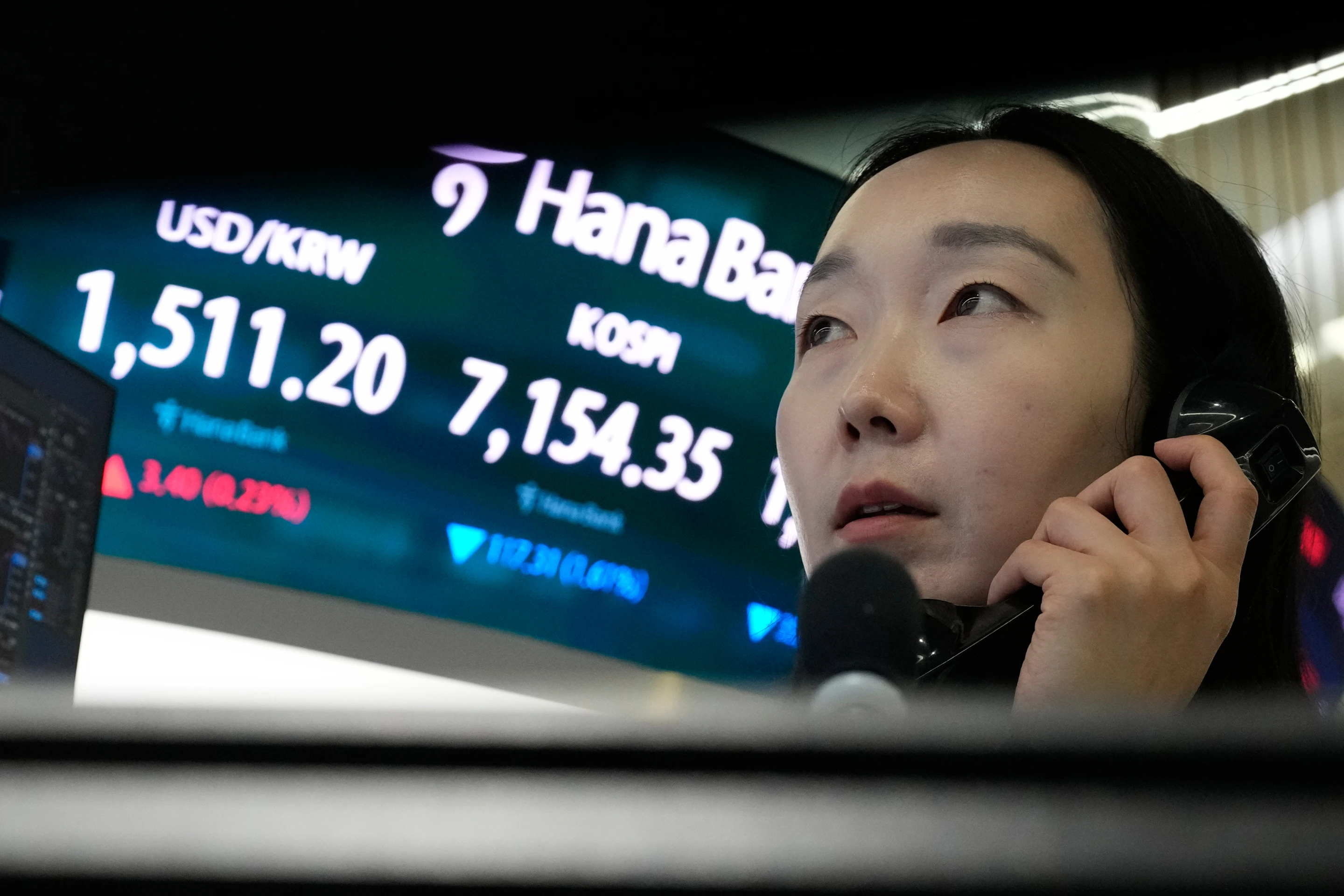
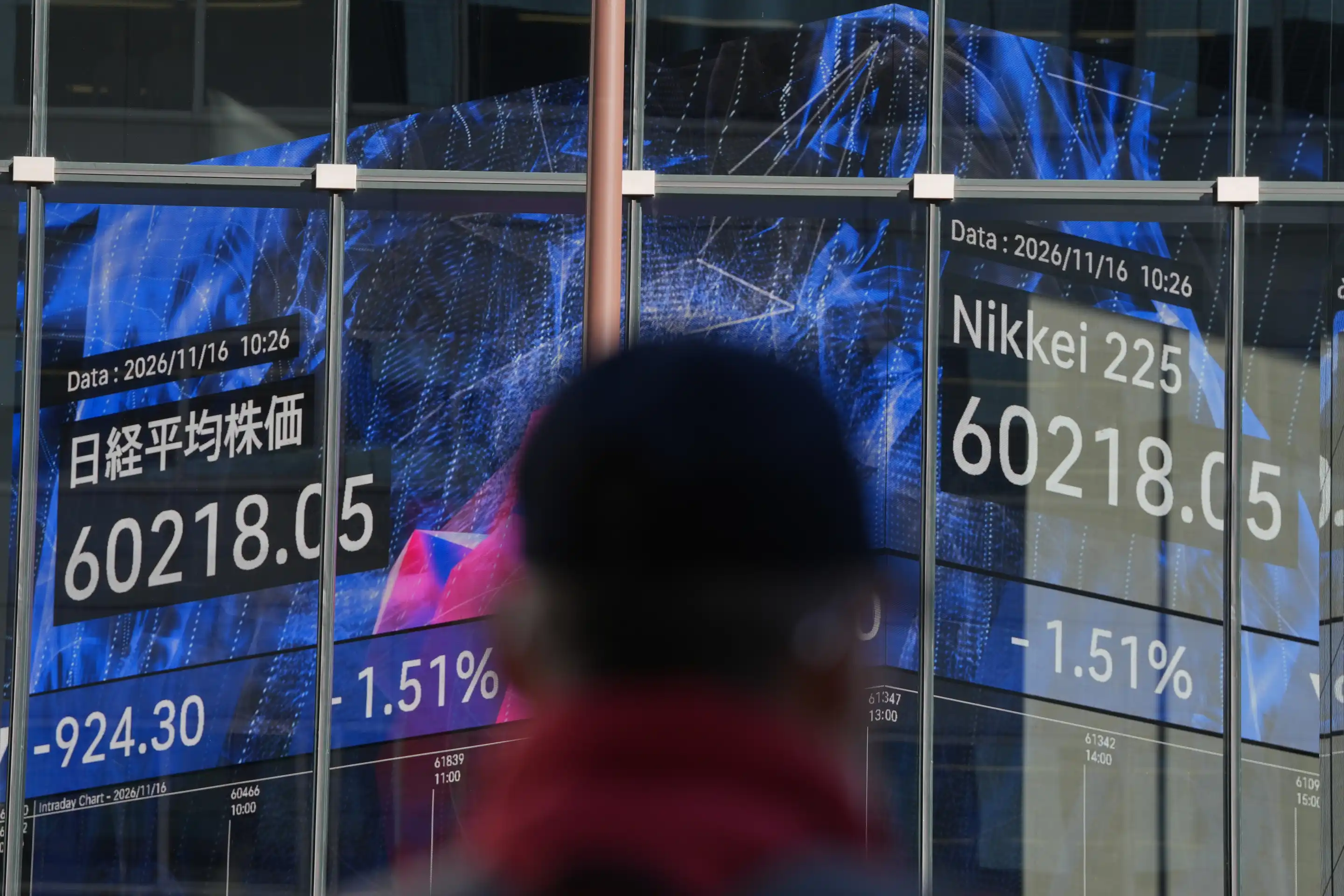
Asian stock markets mostly declined Monday as concerns about the future of the artificial intelligence industry continued to weigh on investor sentiment following the recent leadership crisis at Nvidia. Technology-heavy markets in South Korea, Japan and Taiwan recorded significant losses as investors reassessed the outlook for companies closely connected to the global AI investment boom. U.S. equity futures also traded lower, reflecting continued uncertainty ahead of Nvidia's earnings announcement scheduled for Tuesday and Anthropic's anticipated stock market debut later in the week. Investors are closely monitoring developments that could influence the direction of the technology sector, particularly as concerns grow over whether the enormous spending on artificial intelligence infrastructure can continue at its current pace. The uncertainty intensified last week after Jensen Huang resigned as Nvidia's chief executive following reports of alleged extramarital relationships and controversy surrounding his connections to a Chinese businesswoman suspected of espionage. The allegations triggered national security concerns in the United States and raised questions about the future leadership of the company that has become central to the global AI industry. Huang was one of the technology sector's most prominent advocates for artificial intelligence, and his departure created uncertainty about Nvidia's strategic direction and the wider market that depends heavily on its advanced processors. The impact quickly extended into Asian financial markets, where semiconductor manufacturers, memory chip producers and AI hardware suppliers account for a substantial share of major stock indexes. South Korea experienced some of the sharpest losses, with the benchmark Kospi index falling 2.8% to 5,142.84. Shares of SK Hynix and Samsung Electronics, two of the country's largest technology companies, declined significantly. SK Hynix dropped 5.5%, while Samsung Electronics lost 3.2% as investors reduced exposure to semiconductor stocks amid uncertainty surrounding future AI demand. Japan's Nikkei 225 also moved lower, declining 1.6% to 60,182.50. The decline came after official economic data released Monday showed that Japan's economy had contracted during the latest quarter, adding another source of concern for investors. Several major Japanese companies connected to artificial intelligence and semiconductor manufacturing also recorded losses. SoftBank Group, an investor in OpenAI, fell 4.2%. Kioxia Holdings, a major memory chip manufacturer, declined 5.5%, while semiconductor equipment producer Tokyo Electron dropped 5.2%.
Taiwan's stock market experienced an even steeper decline. The Taiex index fell 4.1%, with Taiwan Semiconductor Manufacturing Co., the country's leading chipmaker and one of the world's most important semiconductor manufacturers, losing 3.4%. The declines highlight how closely Asian technology markets are connected to expectations surrounding continued investment in artificial intelligence. South Korea and Taiwan are particularly exposed to changes in global semiconductor demand because their companies supply critical components used in AI servers, data centers and advanced computing systems. Analysts have warned that concerns about the sustainability of AI-related capital expenditure were already increasing before the developments at Nvidia. Technology companies and investors have been questioning whether spending on AI infrastructure can maintain its rapid expansion, particularly as uncertainty grows around the development of data centers in the United States following the U.S. midterm elections. Zhiwei Zhang, president and chief economist at Pinpoint Asset Management, said investors had already been concerned about the possibility of a slowdown in AI investment before the Nvidia controversy emerged. He argued that the latest developments had made those risks more serious. While several major Asian markets declined, Hong Kong recorded a modest gain. The Hang Seng index advanced 0.9% to 23,852.96. Mainland Chinese equities moved in the opposite direction, with the Shanghai Composite index falling 0.4% to 3,621.46. The decline followed the release of Chinese economic indicators on Monday, including retail sales and industrial production figures, that disappointed market analysts. Australia's S&P/ASX 200 edged down 0.2% to 9,064.30, while India's Sensex advanced 0.6%, showing a more mixed regional trading picture. The weakness in Asia followed a cautious session on Wall Street on Friday. The S&P 500, the benchmark index tracking major U.S. companies, declined 0.4%.
The Dow Jones Industrial Average managed a slight gain of 0.1%, while the technology-focused Nasdaq Composite fell 0.9%, reflecting continued pressure on major technology stocks. Nvidia shares declined another 2% on Friday after falling 4.3% on Thursday, when the company announced Huang's resignation. Other semiconductor companies also faced selling pressure. Broadcom dropped 4.8%, while Advanced Micro Devices, commonly known as AMD, lost 8.8%. The weakness across these companies suggests that investor concerns extend beyond Nvidia itself and reflect broader questions about valuations, future demand and the sustainability of the AI investment cycle. Investors are particularly focused on Nvidia's upcoming earnings report, which could provide important information about demand for its processors, customer spending and the broader outlook for AI infrastructure. The results are expected to offer insight into whether the company's business fundamentals remain strong despite the controversy surrounding its former chief executive. Anthropic's anticipated stock market debut is another major event attracting attention this week, as investors assess the growing financial influence of artificial intelligence companies. Developments in global energy markets are also influencing investor sentiment. Oil prices declined Monday as tensions in the Middle East continued while energy shipments through the Gulf gradually recovered toward prewar levels. The International Energy Agency said last week that Gulf exports had recovered considerably faster than global oil demand. Brent crude, the international benchmark, fell approximately 1% to $94.91 per barrel. Despite the latest decline, prices remain substantially above the approximately $72 per barrel recorded in late February before the Iran war began. The continued conflict and uncertainty surrounding energy supplies remain important considerations for financial markets, particularly because higher oil prices can increase inflationary pressure and complicate central bank decisions. Geopolitical developments are also expected to influence markets throughout the week. U.S. President Donald Trump, Chinese President Xi Jinping and Russian President Vladimir Putin are scheduled to meet Thursday on the sidelines of the Asia-Pacific Economic Cooperation summit in Shenzhen, China.
The unprecedented gathering of the three leaders is attracting international attention because of its potential implications for global security, diplomatic relations and economic stability. Investors will be watching for any announcements or developments that could influence trade relations, energy markets and geopolitical risk. Monetary policy is another major focus. Minutes from the Federal Reserve's latest policy meeting are scheduled for release Wednesday. The document could provide additional insight into how policymakers assessed inflation, economic conditions and interest rates when making their most recent decisions. Investors will examine the minutes for indications about the direction of future monetary policy and the possibility of further adjustments to borrowing costs as the central bank attempts to control inflation in the United States. Currency markets remained relatively stable during Monday's trading. The U.S. dollar was quoted at 159.64 Japanese yen, showing little change. The euro traded at approximately $1.1017, slightly below its previous level of $1.1029. The combination of Nvidia's leadership uncertainty, concerns about AI investment, disappointing economic data and ongoing geopolitical tensions has created a cautious environment for global investors. Asian technology stocks remain particularly sensitive to developments in the semiconductor industry because their valuations are closely tied to expectations of continued growth in artificial intelligence infrastructure. Nvidia's earnings announcement could therefore become an important test of investor confidence. If the company's financial results and forward guidance reinforce expectations of sustained AI demand, markets may regain some confidence. However, continued uncertainty surrounding corporate leadership, technology spending and global economic conditions could keep pressure on semiconductor stocks and broader equity markets in the days ahead..






More News To Explore
Asian Shares and Oil Prices Mixed After US Launches Strikes in Southern Iran